Developer’s Guide: The Future of the WordPress Block Editor
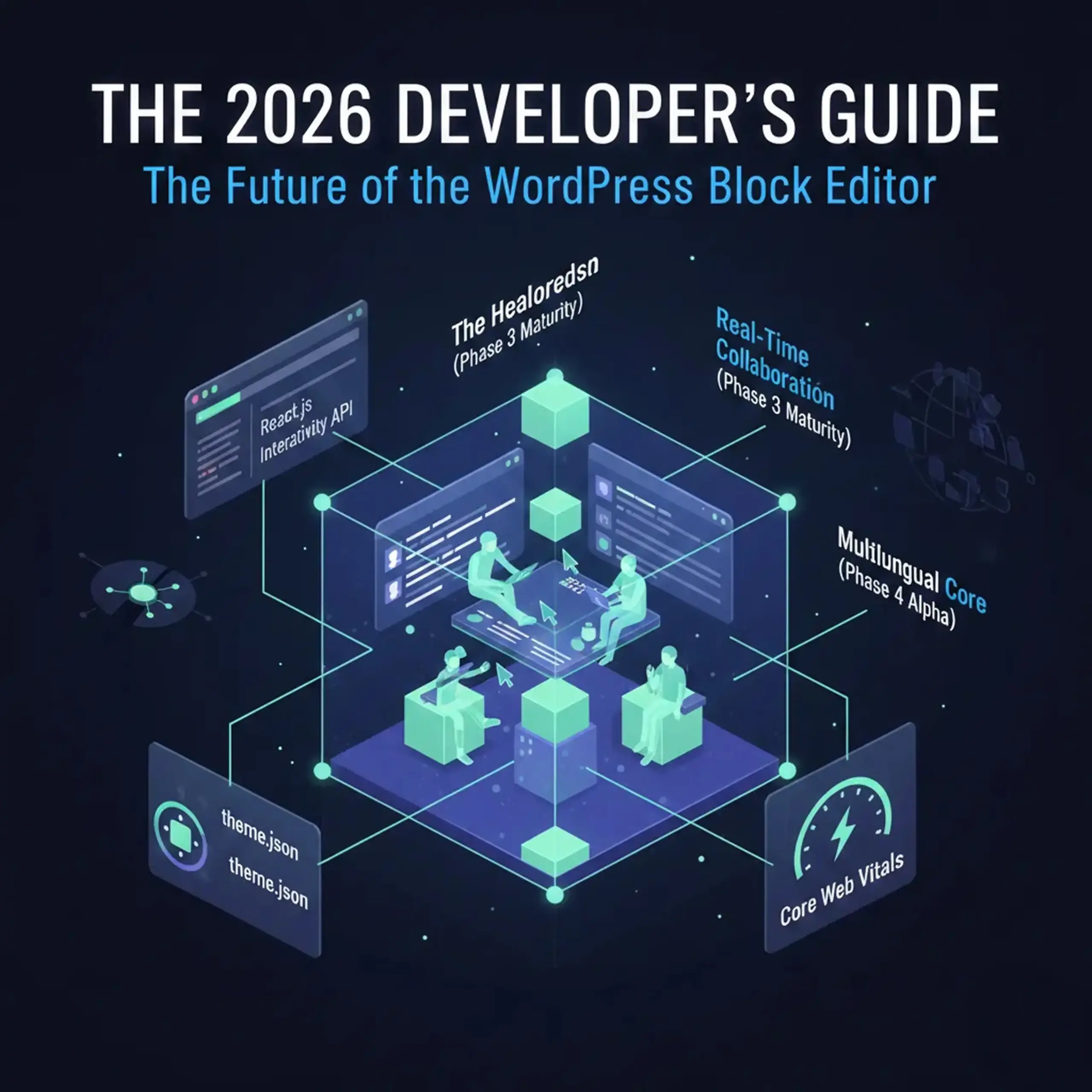
The WordPress Block Editor is no longer just a content tool—it is a sophisticated, React-based component framework. For developers and architects, 2026 represents a turning point where “block-first” is the only standard for building scalable, enterprise-grade digital experiences.
1. The React Evolution: Blocks as Application Components
The days of PHP-heavy templates are largely behind us. Modern block development is now synonymous with React application development. By treating blocks as modular, reactive components rather than isolated chunks of HTML, developers can build interfaces that are:
- Decoupled & Testable: Leveraging modern JavaScript tooling allows for cleaner architecture that adheres to industry-standard patterns.
- Logic-Driven: With the maturity of the Interactivity API, blocks now handle complex client-side logic (like live search or instant filtering) natively, without the need for heavy external libraries.
2. Design Systems via theme.json
In 2026, the theme.json file has become the “source of truth” for site architecture. The declarative nature of this system allows developers to define an entire design language—typography, spacing, and color palettes—in a single, version-controlled file.
Block Bindings API: Recent updates have expanded the ability to bind block attributes to dynamic data sources (like custom fields or external APIs) directly within the editor, reducing the need for custom block types for every unique data point.
Simplified Maintenance: Updating a global style no longer requires hunting through CSS files; a single change in the JSON schema propagates site-wide.
3. Real-Time Collaboration (Phase 3 Maturity)
The most significant update in 2026 is the integration of Google Docs-style collaboration within the core editor.
- Multi-User Editing: Teams can now co-edit posts and pages in real-time, seeing each other’s cursors and changes instantly.
- Editorial Workflows: Native “Site Notes” and status signals (Draft → Review → Approved) are now built into the sidebar, eliminating the need for third-party project management plugins to handle content approvals.
4. Native Performance & Core Web Vitals
Performance is no longer an “add-on.” WordPress 7.0 and beyond have integrated automatic performance optimization into the core engine.
- Speculative Loading: The editor and frontend now use advanced predictive fetching to load pages before a user even clicks.
- Lighter Markup: The move away from legacy page builders has eliminated “div-itis.” Native block markup is dramatically lighter, leading to superior Largest Contentful Paint (LCP) and Cumulative Layout Shift (CLS) scores.
5. The Headless Powerhouse
Gutenberg’s maturity has solidified WordPress’s position as a premier Headless CMS.
- Semantic Data: The block editor ensures content is structured semantically, making it easier for the REST API or GraphQL to feed content to modern frontends (Next.js, Astro, or mobile apps).
- DataViews: Enhanced DataViews in the admin allow developers to create custom management interfaces for large-scale content libraries, providing an “application-like” experience for site administrators.
Summary: Looking Ahead
The 2026 WordPress roadmap is defined by speed, collaboration, and scalability. By moving away from proprietary code lock-in and embracing the native Block Editor, developers are building sites that are not only faster but are significantly easier to maintain and future-proof.
The transition from a “website builder” to a “digital experience platform” is complete. For those building for the web in 2026, the block is the foundation.